
Recycling and Sustainability at Hedge Trimming Manor Park
We present a practical, hometown-focused plan for Hedge Trimming Manor Park that champions an eco-friendly waste disposal area and a model sustainable rubbish gardening area. Our approach balances day-to-day hedge pruning and green waste operations with long-term zero-waste ambitions across the Manor Park community, ensuring that routine grounds maintenance complements local environmental policy and resident priorities.Our Vision for a Greener Manor Park
The Manor Park hedge and garden services aim to transform routine green maintenance into measurable sustainability outcomes. By integrating low-impact operations, on-site sorting stations, and clear signage, the Manor Park hedge trimming programme becomes a catalyst for neighbourhood recycling culture. We emphasise sustainable rubbish gardening practices that divert organic material from landfill and generate quality compost for community beds.
Targets and Local Waste Separation Practices
We have set a clear recycling percentage target of 70% diversion of all site-generated waste within the next three years, rising to 80% by year five. This target aligns with boroughs' approach to waste separation — light mention of kerbside sorting rules, glass/plastic/cardboard separation, and separate food and garden waste streams which local residents already follow. Our site-level systems mirror those borough policies to keep contamination low and recycling rates high.Eco-friendly Waste Disposal Area and Transfer Station Links
To support on-site sorting we operate an eco-friendly waste disposal area that pre-sorts: green waste, wood and bulky garden materials, mixed recyclables, and inert waste. For items that cannot be processed on-site, we use nearby local transfer stations to keep transport miles low and maintain chain-of-custody for recyclables. Typical transfer stations we work with include:- Local Borough Transfer Station A — specialist in green waste composting
- Regional Materials Recovery Facility — plastic, glass and cardboard sorting
- Community Household Waste Recycling Centre — for bulky and inert materials
These links reduce double-handling, improve recycling yields, and lower our carbon footprint by shortening collection routes between Manor Park and the nearest processing centres.
On-site Processing: Sustainable Rubbish Gardening Practices
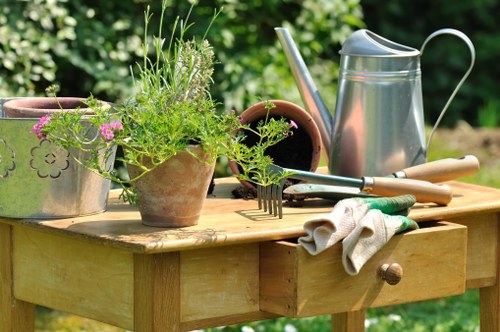
Our sustainable rubbish gardening area turns hedge clippings, prunings and soft green waste into reusable materials. We run a small-scale chipping and screening line for woody material, compost bays for mixed green waste, and designated bins for recyclable horticultural plastics. This keeps organic matter in the local circular economy and supplies compost and mulch back to community plots and verge-planting schemes.Partnerships with Charities and Social Reuse
We partner with local charities to extend the life of materials and support social outcomes. Through these partnerships, usable plant pots, tools in good condition, and salvaged timber are diverted to charities and community projects. Partners include social enterprises focused on reuse, local food-growing charities, and youth employment programmes which train people in green skills.Key collaborative activities:
- Tool and equipment refurbishment for community gardens
- Donations of excess soil, compost and bulk mulch to food-growing charities
- Employment pathways via partner conservation organisations
By working with these groups we ensure that materials and skills circulate locally, boosting both recycling rates and social value from our operations.
Low-Carbon Fleet and Operational Efficiency
Our fleet is transitioning to low-carbon vans and light electric vehicles for local collections and drop-offs. A mix of fully electric vans and efficient plug-in hybrids reduces tailpipe emissions and noise in the Manor Park area. We also employ route optimisation to minimise mileage, consolidate loads to local transfer stations, and schedule collections during off-peak hours to lower congestion impacts.Measuring Impact and Reporting Progress
We track monthly tonnages of green waste, recyclables and reused materials. Regular reporting lets us assess progress toward the 70–80% recycling target and adjust operations — from additional sorting capacity to more frequent charity handovers. Data transparency supports continuous improvement and aligns our activities with borough waste separation standards so residents recognise consistent practice between roadside collections and on-site processing.Wherever possible we use low-energy equipment in the sustainable rubbish gardening area and prioritise manual separation to reduce contamination and mechanical energy use.
Community Benefits and Behavioural Alignment
Hedge Trimming Manor Park provides local amenity benefits as well as environmental ones. The compost and mulch produced are offered to community planting initiatives; surplus materials support school gardens and local allotments. Our signage and site layout make it straightforward for gardeners and contractors to sort waste in line with borough guidance, promoting seamless alignment with household recycling behaviour.
Practical Partnerships and Examples
Examples of practical partnerships we maintain include neighbourhood conservation groups, a community compost cooperative, and a furniture-reuse charity that accepts reclaimed timber. These partnerships are formalised through shared collection schedules and periodic material handovers to ensure steady reuse:- Community Compost Cooperative — accepts screened green waste and returns finished compost
- Conservation Volunteers — receive woody chippings for habitat projects
- Reuse Charity — collects reusable containers, tools and salvaged timber
 Looking Ahead: A Low-Impact, High-Value Manor Park
Our pathway for Hedge Trimming Manor Park builds on borough waste separation policies, local transfer station networks, charity partnerships, and a low-carbon van fleet to create a robust, scalable model of urban green waste management. By meeting and surpassing our recycling percentage target, we will sustain a productive, attractive park landscape while returning value to the community through materials reuse, reduced emissions, and greener public spaces.
Looking Ahead: A Low-Impact, High-Value Manor Park
Our pathway for Hedge Trimming Manor Park builds on borough waste separation policies, local transfer station networks, charity partnerships, and a low-carbon van fleet to create a robust, scalable model of urban green waste management. By meeting and surpassing our recycling percentage target, we will sustain a productive, attractive park landscape while returning value to the community through materials reuse, reduced emissions, and greener public spaces.